
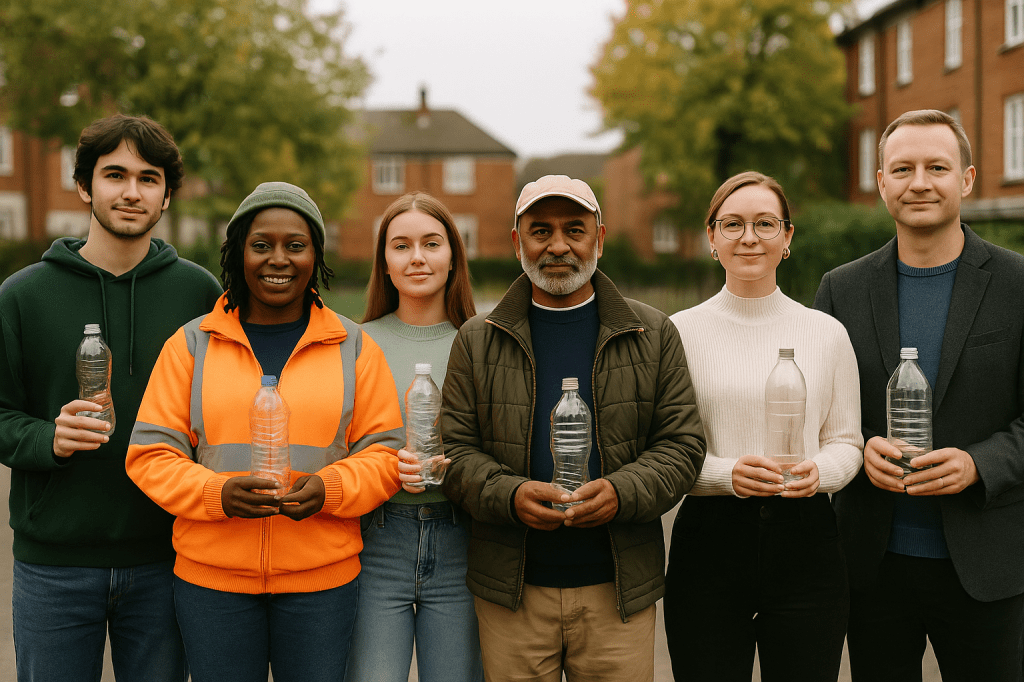
As the UK’s DRS Nears Launch, a Deeper Question Emerges
As the UK edges closer to rolling out its long-anticipated Deposit Return Scheme (DRS), public discourse remains focused, quite understandably, on the central pillars: logistics, cost recovery, coordination, and enforcement. These structural considerations are essential. But behind the policy language and procurement schedules lies a quieter question, one that may ultimately shape the success of the scheme more than any contractual milestone.
Who, exactly, is this system being designed for?
Due to the numerous headlines surrounding compliance, convenience, and circularity, one truth remains: a sustainable economy is only as inclusive as the systems that enable it.

Beyond the Bin: Rethinking Participation in Circular Systems
A DRS recaptures value by diverting containers from landfills toward reuse or recycling. However, when the system creates value only at the moment a bottle is returned, such as through a Reverse Vending Machine, it risks reducing “participation” to a transaction rather than fostering a broader behavioural culture.
Conventional DRS designs tend to frame participation in limited terms: a consumer returns a container, a retailer hosts the infrastructure, and a logistics operator retrieves, sorts, and tallies the items. This top-down supply chain may ensure material throughput, but it omits a broader ecosystem of human actors and grassroots dynamics that have long operated on the periphery.
There are early-morning waste collectors in UK cities recovering high-value recyclables before any formal bin is touched. School communities are organizing bottle drives to fund meals or uniforms. In many underserved areas, small shopkeepers serve as informal collection nodes, often without compensation or support. At the innovation frontier, young startups explore digital tools that transform ordinary returns into micro-rewards, behavioural nudges, or gamified civic action.
These contributors do not always appear in government white papers, yet they are the connective tissue of real-world circularity.
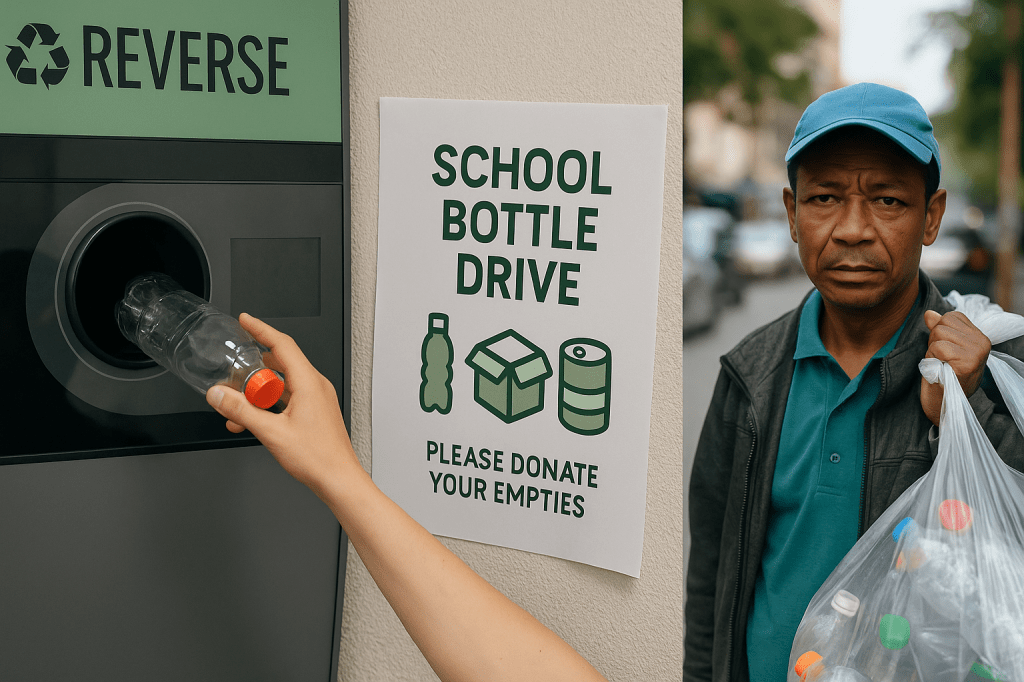
The Missing Layer in UK DRS Design
The UK’s proposed DRS model, built around a centrally administered Deposit Management Organisation (DMO), offers standardization and coverage. These are legitimate design goals, especially in a national scheme. However, in aiming for control and consistency, such models often limit the role of non-institutional players — those whose impacts are diffused, localized, or hard to quantify.
A centrally engineered system may appear functional on paper but can remain rigid in practice. If the model defines participation too narrowly —such as retailer, operator, or consumer — it risks excluding precisely the kinds of actors who make circularity culturally resonant and socially embedded.
A truly effective DRS must go beyond top-down infrastructure. It must account for the distributed creativity of community, entrepreneurship, and informal practice. Otherwise, we risk mistaking compliance for success.

Designing for the Edges: A Blueprint for Participation
Designing with the edges in mind means recognizing that innovation often lives outside of formal structures. The communities most affected by waste, the actors most willing to change behaviour, and the innovators most able to test ideas often fall outside central procurement frameworks.
Imagine a system where returning bottles funds local schools, compensates corner shops for hosting drop-off points, and gives councils access to live return data to tailor hyper-local interventions. Envision a scenario where digital ID tools empower informal waste collectors to participate in active, traceable, and rewardable return cycles.
These are not radical departures from the DRS vision. They are subtle shifts, from gatekeeping to inclusion, from fixed pathways to open ecosystems. These are design decisions that ask not just what we require but what we can achieve when we invite more people to play a role.
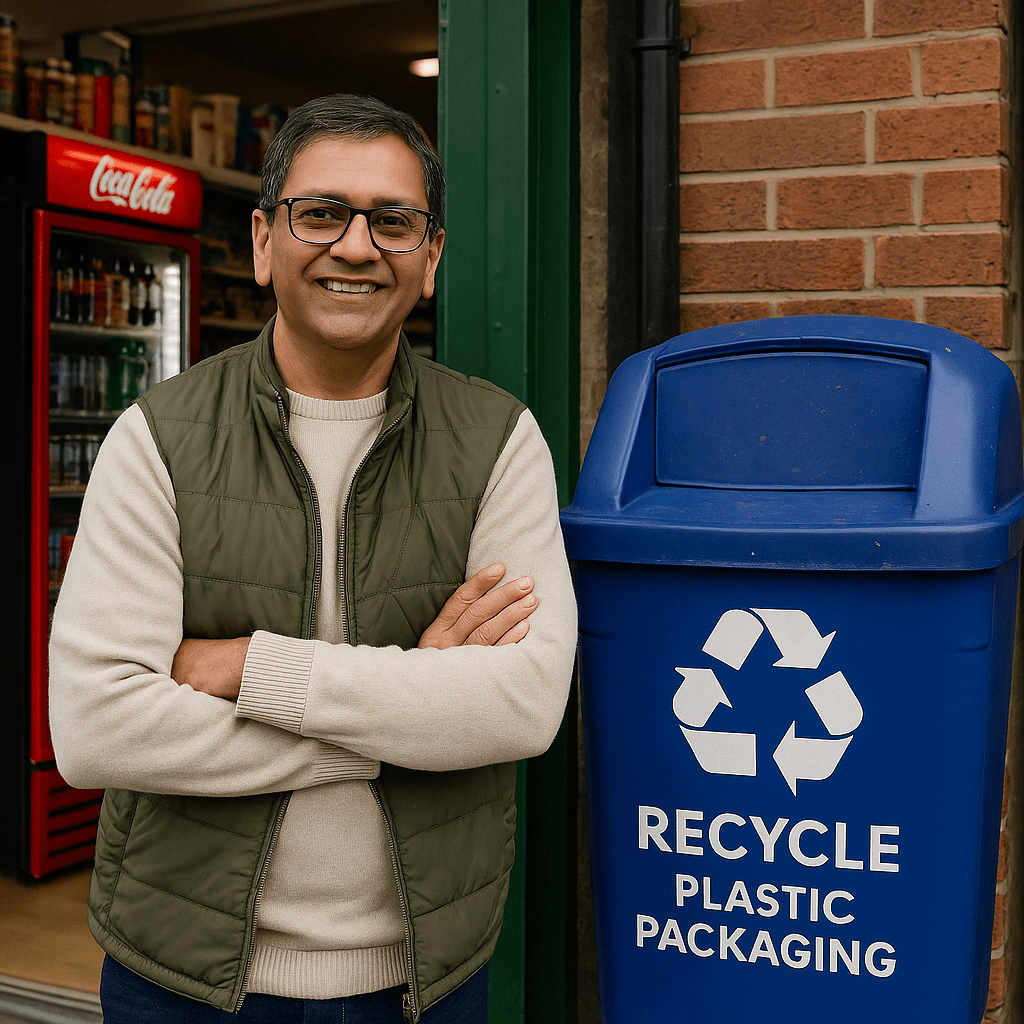
A More Resilient Circular Economy
When the UK’s DRS finally goes live, it will represent a significant policy milestone. Whether the system matures into a long-term circular asset will depend less on the number of containers people return in the first year and more on how many feel they have a meaningful stake in that return.
Systems built only for compliance are fragile; systems built for participation evolve. They are adaptable because they are inclusive. They are efficient not just in logistics but in trust, alignment, and reach.
Circularity is not just a technical puzzle. It’s a human equation. It demands more than legislation: it requires culture, relevance, and design that meets people where they are. In short, people don’t just want to recycle; They want to matter.
Suppose the UK is to meet both its environmental goals and economic ambitions. In that case, it must reimagine DRS not just as a returns program but as an enabling layer in a much broader value chain, where value is created not only by what is collected but also by who is empowered to contribute.

The GreenBargains Initiative continues to explore how digital systems, inclusive participation, and local circular value chains can work together to drive a more equitable and sustainable UK economy.
ABOUT THE AUTHOR
“Stay informed. Subscribe for more insights on sustainable tech and circular economy solutions.”
 GreenBargains Initiative
Leave a comment