
The Mountain of Empty Things
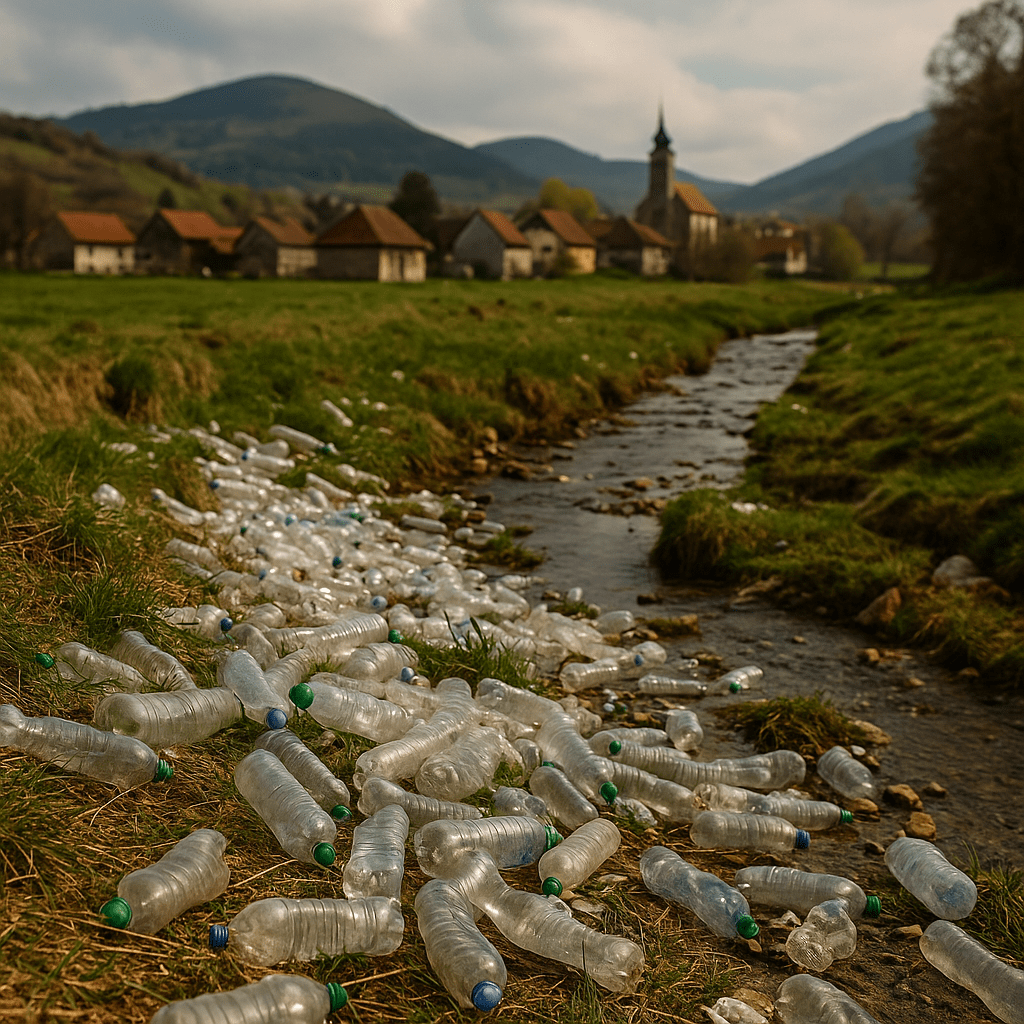
Long ago, there was a Great City perched beside a quiet village. The City was a marvel of invention, famous for crafting all manner of bottled elixirs and sparkling waters. These bottles were beautiful and convenient, made to travel far and wide. And they did, rolling down hills, floating through rivers, carried by wind, tossed into carts, dropped in haste. But as time passed, the villagers below noticed something strange. The fields that once grew wildflowers were now filled with discarded bottles. The streams that once sang quietly now choked on the hum of clutter. Still, the City thrived. It sent word that it had heard the whispers of the hills. It would install great baskets for returns, a coin for every bottle, and a basket at every square. The villagers applauded, hopeful. But when they looked closer, many saw that the baskets only stood where the roads were smoothest, in places where trucks could turn easily, in shops where space was plentiful, and in towns with clear maps and fixed routes. And so, the village waited.
The Long Silence Between Intent and Impact
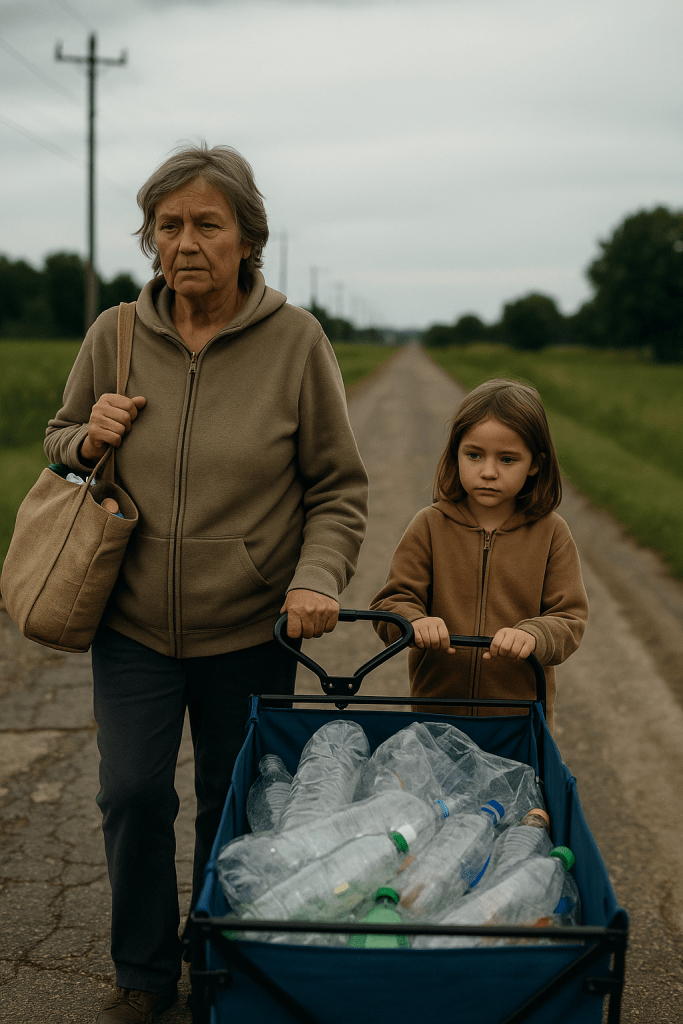
In the beginning, some tried to make do: children gathered bottles in wheelbarrows, grandmothers walked for miles to find the nearest basket, but soon, fatigue settled in. The reward was there, but the road to reach it was long. Some of the City’s advisors called it progress. “The system is in place,” they said. “The numbers will catch up.” But others began to wonder: What if the system wasn’t just about infrastructure? What if it was about who felt seen, and who didn’t? The baskets, though noble, had grown apart from the people they were meant to serve. The forest’s edge had no path to them. The single shop in the old quarter didn’t qualify to host one. The young, eager to earn, had no map to guide them. And so, the village waited.
The Tinkerers at the Edge

One day, a young man named Bri, known for fixing old lanterns and reworking broken tools, began asking different questions: “What if we made something that lived between the baskets and the people?” he said. “Something that didn’t need to wait for roads or big budgets. Something that spoke to the way people move, not just how diagrams say they should.” He wasn’t trying to replace the baskets or shame the City, he believed that if value was hidden in every discarded bottle, then everyone deserved a way to find it. He built his ideas quietly, listening to what wasn’t being said in the Great City’s plans. He spoke to villagers, not in grand speeches, but in whispers and sketches. His goal wasn’t to command the centre, but to connect the edges. And slowly, bottle by bottle, hill by hill, the waiting began to wane.
The Great Realisation
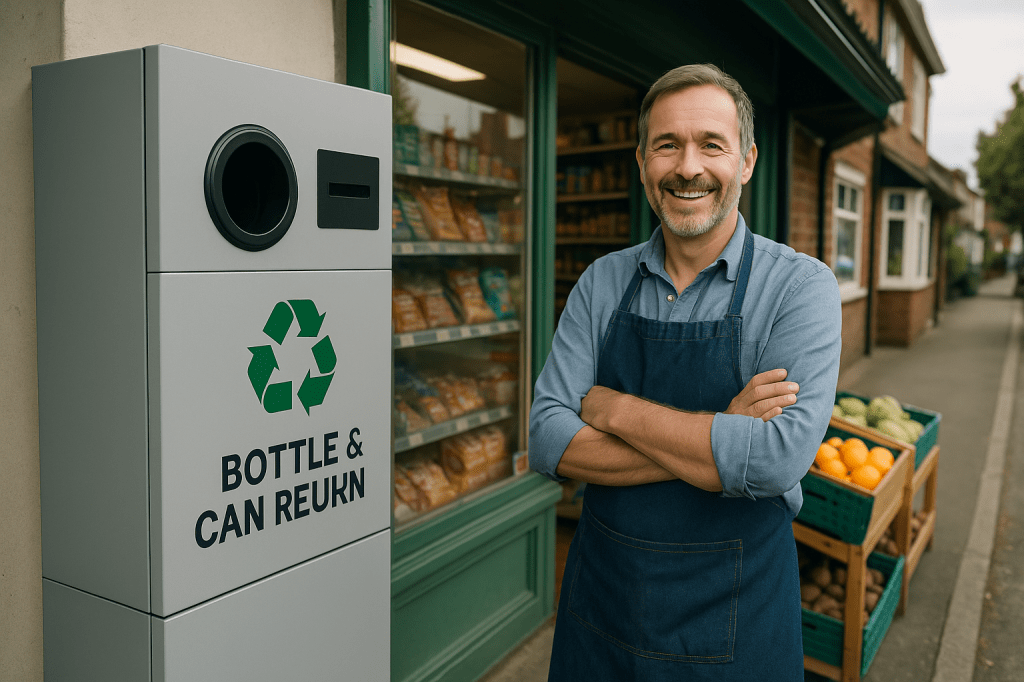
Eventually, the Great City looked down and noticed something remarkable. In villages once considered “too small,” return rates rose. In shops that were too cramped, participation blossomed. In neighbourhoods left off the original map, bottles returned in droves – not because the system had finally expanded, but because someone had designed for those beyond its reach. And in that quiet shift, the City realised its baskets, while well-intentioned, were not enough. What was missing was the bridge between policy and possibility. Between the return point and the real-life path to get there. The village had not lacked effort, it had lacked inclusion.
The New Map

In time, the City redrew its plans, not by erasing the old, but by adding what had been missing. It began to treat the fringes not as afterthoughts, but as frontlines of innovation. The young man’s work was no longer seen as a patch but as a path. And the village? It no longer waited. It walked forward.
Closing Reflection
In our world, just like in the story, many systems begin with good intentions but fall short in design. Especially when they overlook the human realities of infrastructure, access, and trust. The lesson is clear: return is not just a function, it’s a relationship. A truly circular economy is not only about what we collect, but who we empower to collect it.
Let us remember: the quietest village may hold the loudest lesson.
ABOUT THE AUTHOR
“Stay informed. Subscribe for more insights on sustainable tech and circular economy solutions.”
 GreenBargains Initiative
Leave a comment