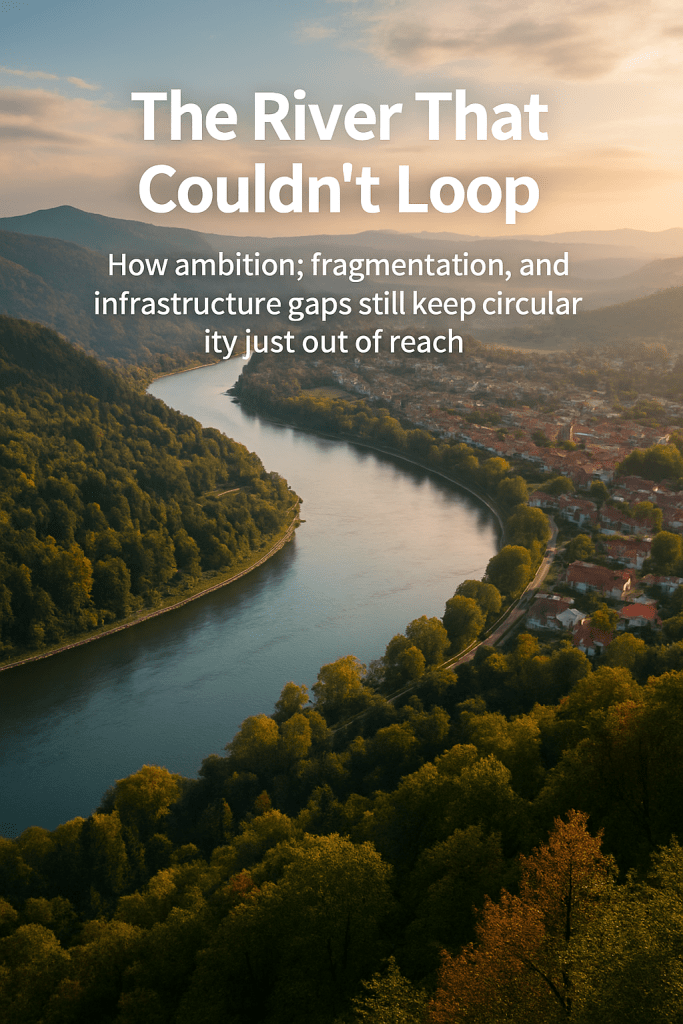
Once upon a time, there was a river. It began high in the hills, where visions were clear and ambitions ran strong. The river was proud, not just for the life it carried, but for a promise whispered from its source: “One day, everything I give will return.” This river didn’t just flow with water, it carried shiny plastic bottles, sleek aluminium cans, and promises printed in bold fonts — declarations of “100% recyclable,” “carbon neutral,” “return me.” It rushed downstream with banners of sustainability waving high, telling the world it was working toward a circular future.
But as the river rolled across the land, something began to unravel.
The loops broke, not because of a lack of will, but a lack of way.
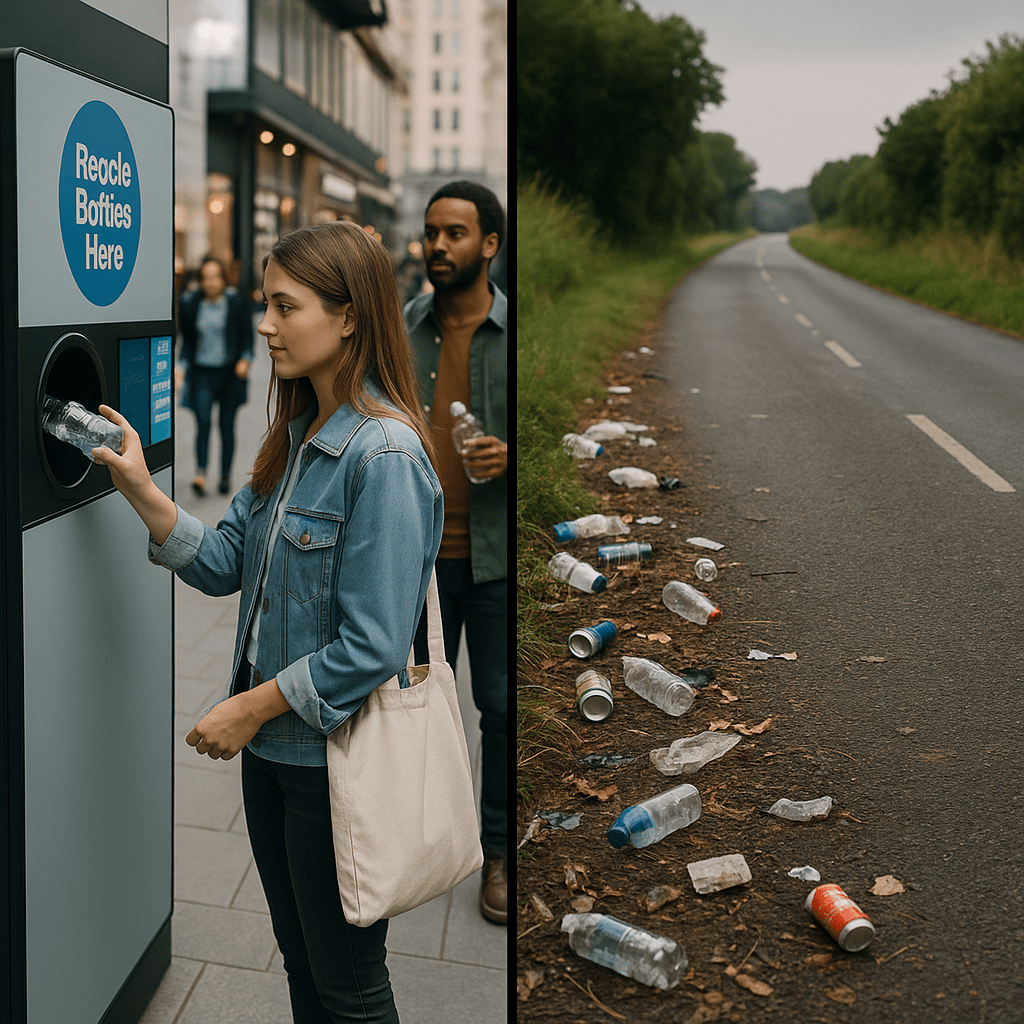
In the big cities, where buildings touched the clouds and stores buzzed with digital tills, some bottles made it back. Machines blinked, scanners beeped, and deposits were returned; A loop closed, a promise fulfilled.
But beyond the motorways and skyline edges, the river reached smaller towns, then villages, farm gates, and in those places, the bottles didn’t return. Not because people didn’t care, but because the systems to return them weren’t there.
No Reverse Vending Machines.
No collection points.
No reward apps.
No loop.
And so, the bottles stayed; on roadsides, in ditches, some buried, some burned, and some floating back toward the very river that once carried them forward.
The trouble was never the river; it was the missing bridges.
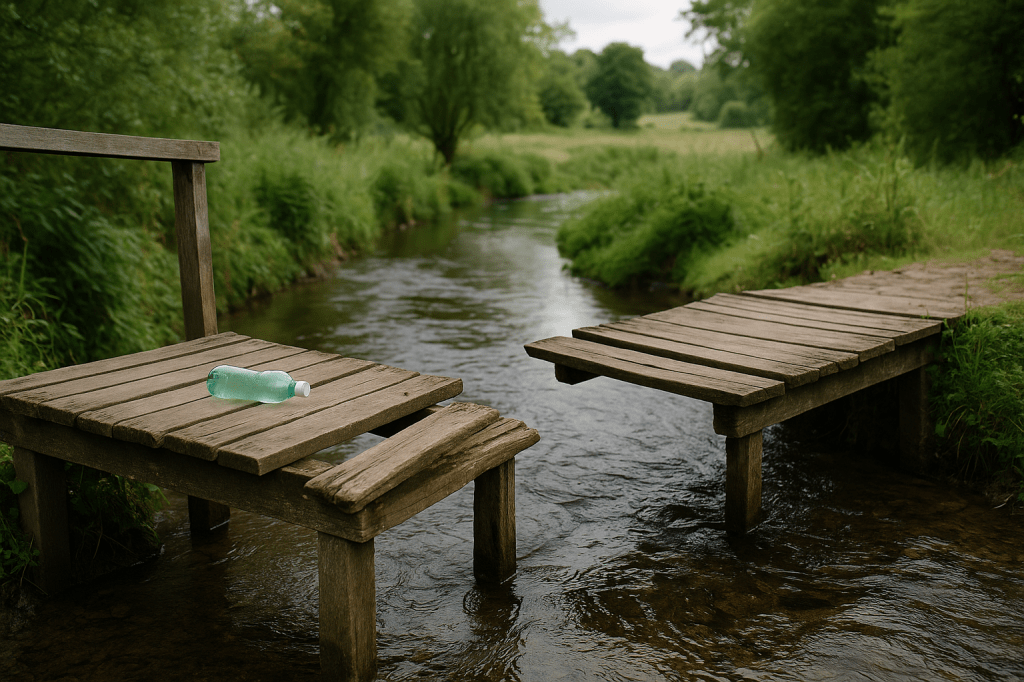
You see, the custodian behind those bottles, a global force known in every language, had made real commitments. It had invested in recycled content, pushed reuse targets, and launched initiatives on multiple continents. However, its reach had outgrown its return. Too many silos, too much centralization, and too few tools connecting ambition to action, especially where infrastructure was weakest.
Glass in one region, plastic in another, labels that didn’t scan, shops that weren’t included, communities that weren’t invited, and slowly, the loop that looked beautiful in boardrooms began leaking on the ground.
Powering the Loop Locally: A Smarter Way to Reach Everyone

What if, instead of more machines, we built bridges?
What if small shops could scan bottles with a phone?
What if schools could run campaigns that tracked impact?
What if remote villages could plug into the same system as city supermarkets, not by replacing what works, but by extending it? This isn’t a fantasy; this is what GreenBargains Initiative believes is not only possible but necessary.
Because sustainability doesn’t live in headlines, it lives in the everyday moments: when a parent drops a bottle off after school, when a corner shopkeeper helps track returns, when a brand can trace its packaging, not just by tonnage — but by trust.
The river doesn’t need to change direction; it just needs more ways to return.

The story of the river that couldn’t loop isn’t a failure; it’s a pause. A reminder that circularity can’t just be bold — it must be built, piece by piece, across landscapes that are unequal, underserved, and under-connected. And if we make it right — not just with machines, but with people, partnerships, and add-on systems — then maybe, just maybe, we’ll finally hear the river whisper: “Everything I give… comes back.”
GreenBargains Initiative
Closing the loop — not by going bigger, but by going everywhere.
ABOUT THE AUTHOR
“Stay informed. Subscribe for more insights on sustainable tech and circular economy solutions.”
 GreenBargains Initiative
Leave a comment