

Centralization may streamline systems, but at what cost?
As the UK prepares to launch its Deposit Return Scheme (DRS), the appeal of a centrally managed infrastructure is clear: consistency, oversight, and uniform reporting. However, the decision to rely on a single fixed system, particularly one designed around a singular national framework, brings with it invisible trade-offs.
Too often, these trade-offs aren’t logistical; they’re human. Centralization, if not designed with flexibility in mind, can make it harder for the very people who should power the scheme to engage fully.
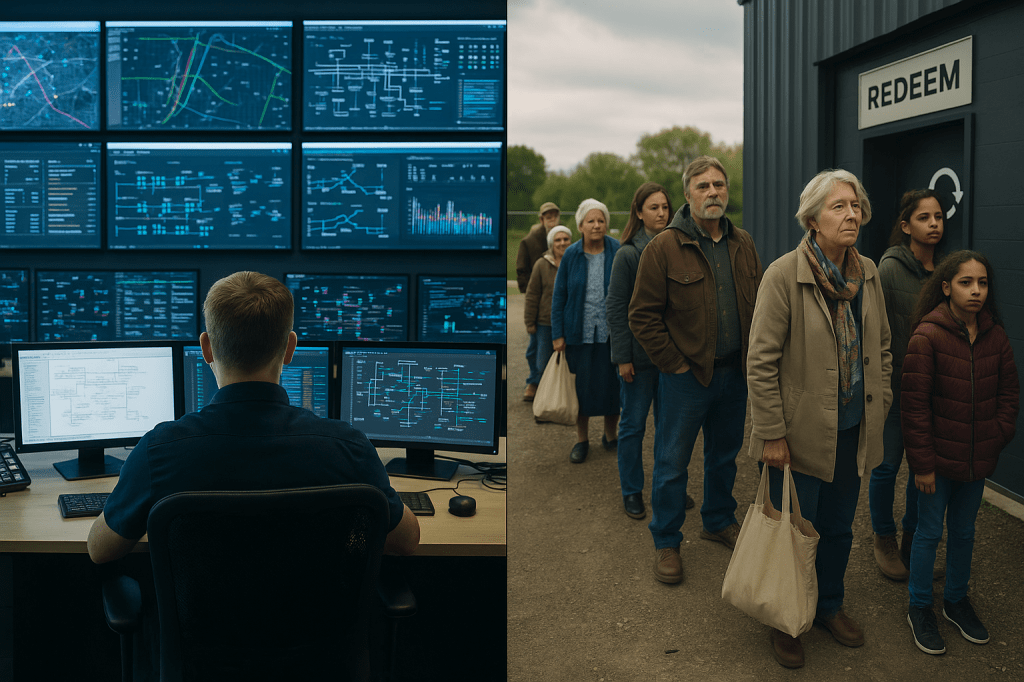
When a system works, but not for everyone
In several European countries, DRS models have adopted centralized technology infrastructures that are streamlined and vertically integrated. These systems often function well at scale, offering predictable reporting and control; however, not every stakeholder benefits equally from them.
In one example, a local council wanted to connect its community-run recycling drive to the national return infrastructure. The initiative was simple: collect containers during school events and log them into the system. But the national infrastructure didn’t support this kind of interface. There was no way to access the system outside of approved devices or channels. The council was forced to record returns manually, which delayed reimbursements and made data tracking nearly impossible.
In another instance, a small rural shop was selected as a return point. However, the container return equipment required stable internet and sufficient space, both of which were in short supply. Despite the shopkeeper’s willingness to support the scheme, ongoing technical barriers eventually forced them to withdraw.
These stories aren’t failures of motivation — they’re mismatches between system design and lived context.
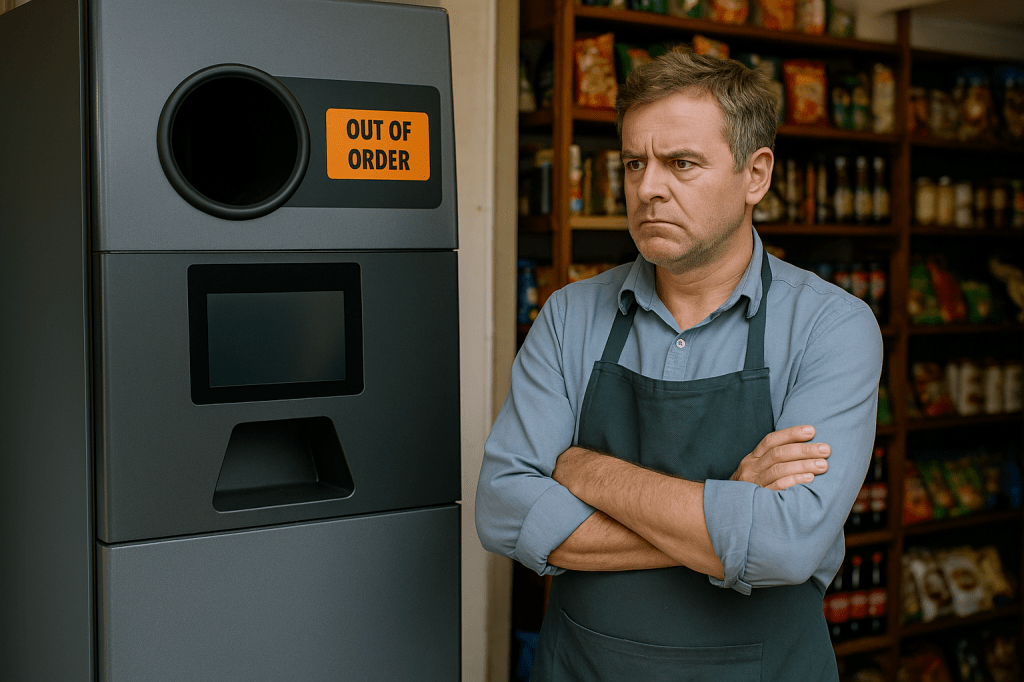
Centralization must be accompanied by adaptability
1. A single system doesn’t fit every setting.
What works for a supermarket chain may not work for a mobile collection unit or a corner shop. DRS rollouts must account for diverse environments, including urban, rural, formal, and informal settings, and accommodate layered forms of participation.
2. Participation shouldn’t depend on system access.
If the only way to interact with a national scheme is through pre-approved tools or interfaces, smaller stakeholders, ranging from schools to councils to individual retailers, may be left out. That weakens overall engagement.
3. Local energy often sits outside the centre.
Many of the most creative waste collection initiatives arise locally, through neighbourhood campaigns, youth groups, or independent efforts. These groups rarely have direct access to national infrastructure, but they often play a vital role in shifting public behaviour.
4. Centralisation must leave space for others to plug in.
It’s possible to build a strong, central system that also invites connection. Allowing different types of actors to interact, even peripherally, strengthens resilience and increases coverage.

Closing Reflection
Technology can certainly simplify coordination, but only if it remains open to complexity. The lesson from DRS schemes worldwide is clear: central systems may set the standards, but inclusive systems deliver results.
The UK now stands at a crossroads in its design. A successful DRS isn’t just one that functions smoothly; it’s one that people, businesses, and communities can use meaningfully.
The goal isn’t to decentralize for its own sake. It’s to centralize the framework while decentralizing access. That’s how circularity spreads, not through control, but through participation.
ABOUT THE AUTHOR
“Stay informed. Subscribe for more insights on sustainable tech and circular economy solutions.”
 GreenBargains Initiative
Leave a comment