

As England, Wales, and Northern Ireland prepare to launch a national Deposit Return Scheme (DRS), the UK has a rare chance to skip mistakes and adopt proven ideas from countries that have already delivered high-performing programs. Scandinavia’s redemption rates top 90 percent, Germany’s “Pfand” network hums with retailer support, and the Netherlands shows how clear messaging wins public trust. Drawing on these examples, this article offers five lessons the UK can use to build a DRS that is simple, fair, and widely embraced.
1. Keep It Simple – Norway’s One-Price Model
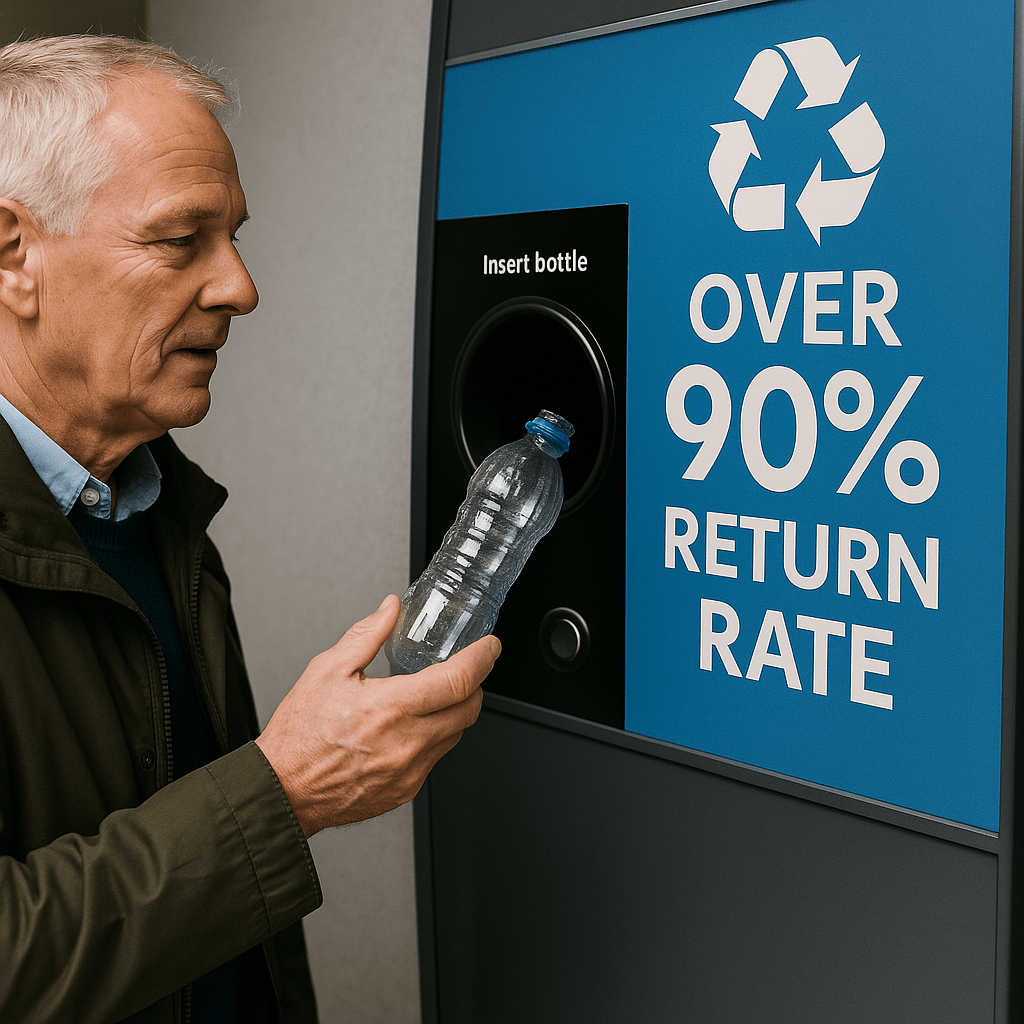
Walk into almost any Norwegian grocery store, and you will see a Reverse Vending Machine (RVM) with a single, universal deposit value. Whether a shopper returns a can of cola or a litre bottle of water, the refund is the same, and the process takes seconds. That clarity, paired with the ubiquity of return points, even in small corner shops, removes hesitation: Norwegians know precisely what each empty container is worth and where to take it.
UK takeaway: adopt a flat deposit wherever possible and place return facilities where people already shop. Simple pricing and everyday access reduce friction, making participation a habit rather than a chore.
2. Engage Retailers Early – Germany’s Mandatory Network
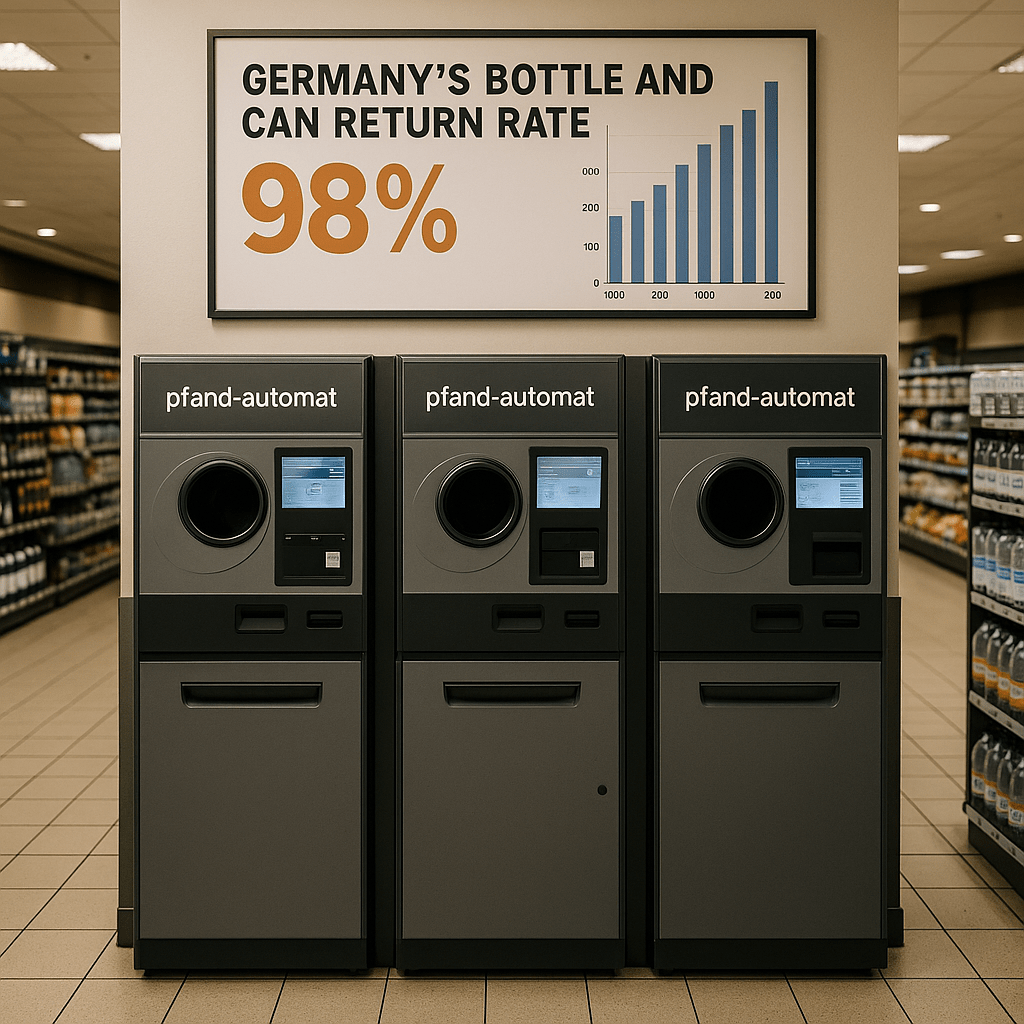
Germany’s DRS works because retailers are not spectators; they are pillars of the system. Supermarkets above a set size are legally obliged to accept returns, and clear reimbursement rules ensure the extra workload is funded. By integrating collection into everyday shopping routines, Germany ensures that residents can reclaim deposits immediately after finishing a drink without needing to search for a specialized deposit return point.
UK takeaway: set retailer obligations that are proportionate to store size and back them with training, hardware support, and transparent cost recovery. When shops see DRS as a service rather than a burden, the public gains thousands of convenient return points on day one.
3. Speak the Public’s Language – The Netherlands’ Multimedia Push
When the Netherlands expanded its scheme to cover small plastic bottles and cans, authorities didn’t rely on signage alone. Roadshows popped up in high-street markets, animated explainer videos ran on social feeds, and supermarkets posted bright infographics at checkout. By launch day, most Dutch consumers could recite what to return, where to go, and how much they would earn. Questions were answered before confusion could spread.
UK takeaway: combine traditional media, social platforms, and honest in-store messaging to create one clear storyline. Tell residents what, where, and why, then repeat it often enough that the answers feel obvious.

4. Mix High-Tech with Human Touch – Finland and Denmark’s Hybrid Model
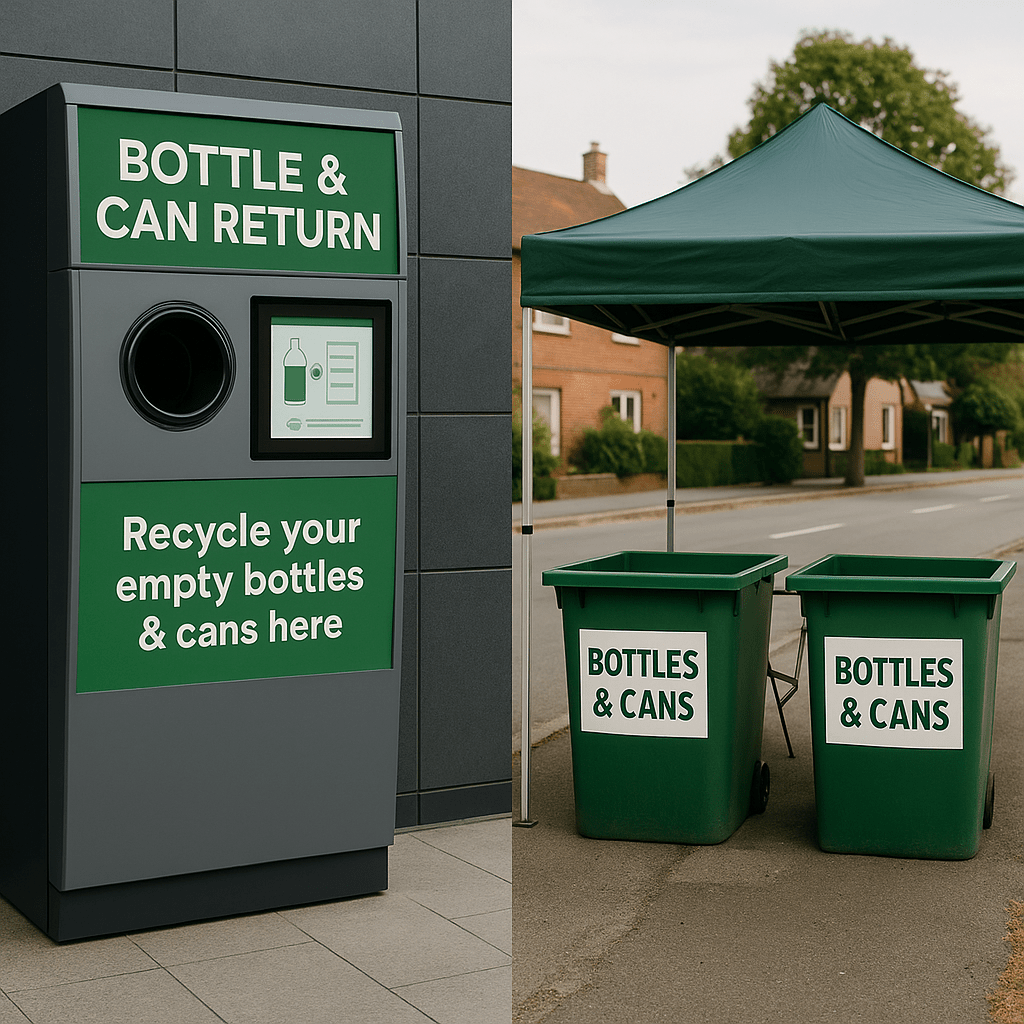
Finland and Denmark prove that a country can marry sophisticated RVM networks in busy cities with manual collection points, pop-up depots, and even recycling vans in sparsely populated areas. This flexibility keeps costs reasonable while ensuring no community is left out. Residents in rural villages still receive the same service standard as city dwellers, just through different infrastructure.
UK takeaway: design return options that fit location and footfall. Deploy large-capacity RVMs near supermarkets and transport hubs; offer staffed booths, shared machines, or mobile events in places where a permanent unit would sit idle. Coverage matters more than uniform technology.
5. Let Data Steer the Ship – Sweden’s Targeted Tweaks
Sweden’s regulators didn’t declare victory after the launch; they watched live data. When dashboards revealed towns with low participation, officials implemented short-term incentives, established additional return points, and sent targeted messages through local media. Return rates rose quickly, and the interventions were rolled back or adapted elsewhere. Data turned guesswork into surgical action.
UK takeaway: build real-time monitoring and feedback loops from day one. Give councils and Deposit Management Organisations the authority to fine-tune deposit levels, add collection sites, or boost promotions where numbers lag. A living dataset keeps the scheme nimble and fair.

Towards a Thriving UK DRS
Taken together, these lessons point to a simple recipe: clear rules, broad retailer partnership, relentless communication, infrastructure that matches geography, and data that guides continuous improvement. If the UK follows this path, it can shorten the learning curve, lift redemption rates quickly, and deliver genuine environmental gains.
At GreenBargains Initiative, we help councils, retailers, and community leaders put these principles into practice through flexible, data-driven tools that stay behind the scenes yet make recycling easier and more rewarding. As the UK’s DRS journey begins, we look forward to supporting partners who share the goal of turning every bottle and can into a cleaner, greener future.
ABOUT THE AUTHOR
“Stay informed. Subscribe for more insights on sustainable tech and circular economy solutions.”
“What are your thoughts on this? Let us know in the comments below.”
 GreenBargains Initiative
Leave a comment